Will ChatGPT Recommend Your Local Business? AI Search Checklist for 2026
Use this AI search checklist for local business owners to see whether ChatGPT, Gemini, and AI search tools can understand and verify your business.
 Leo Lee12 min read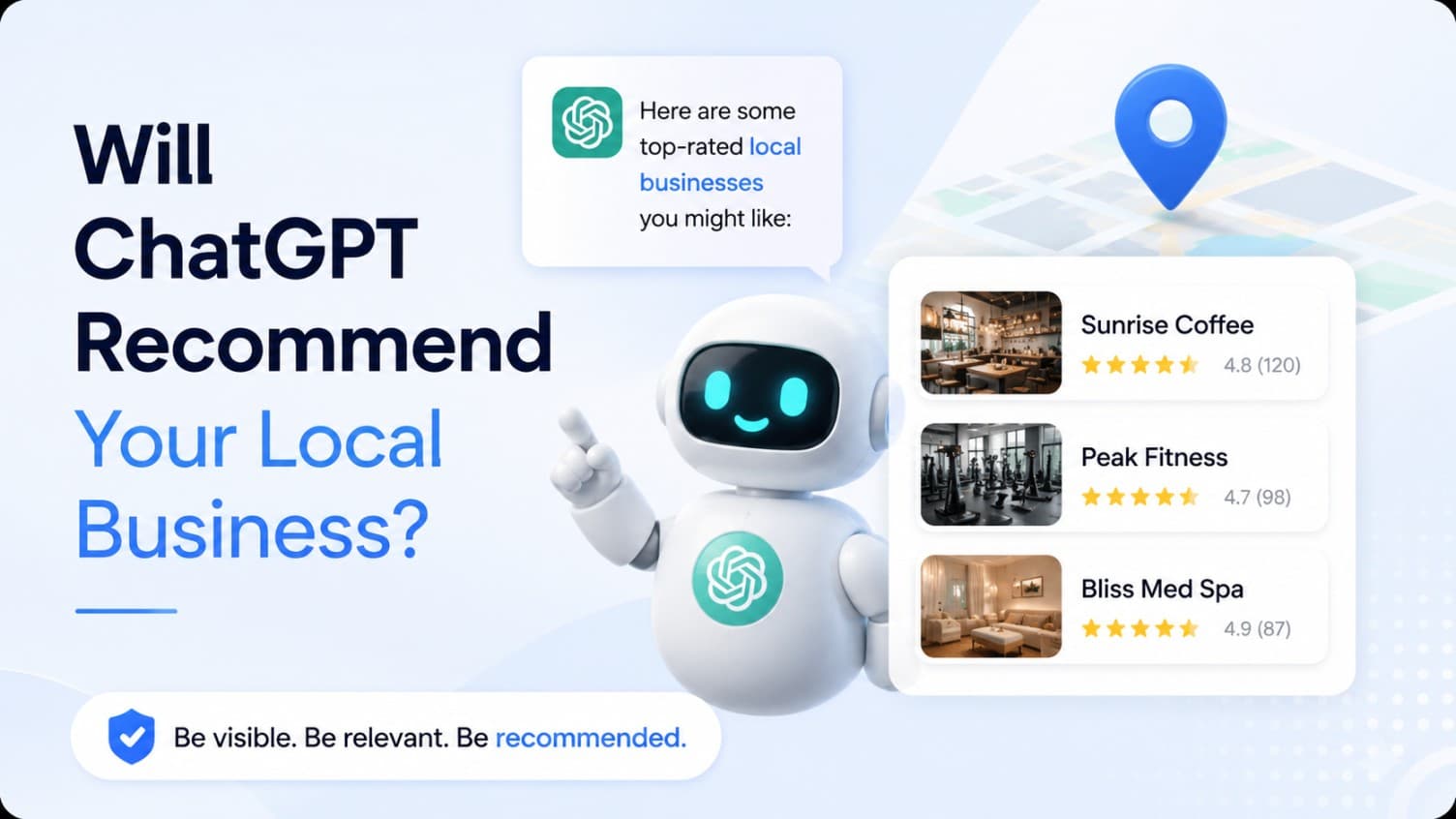
You cannot force ChatGPT to recommend your local business.
You can make it easier for AI search tools to understand what your business does, where you serve customers, why people trust you, and what a visitor should do next.
That is the practical answer to AI search for local business in 2026. ChatGPT, Gemini, Google AI experiences, Perplexity, Copilot, and other AI search tools are becoming part of how people research local options. But AI search does not replace the website, reviews, Google Business Profile, social profiles, or booking/contact paths. It pulls from a mix of visible signals, and people still verify what AI tells them.
So the goal is not "hack ChatGPT." The goal is simpler: make your business easy to find, easy to verify, and easy to contact after an AI recommendation.
Quick answer: will ChatGPT recommend your local business?
Maybe. No business can guarantee that ChatGPT will recommend it.
OpenAI's ChatGPT Search help says ranking is based on multiple factors and there is no guaranteed top placement. It also explains that ChatGPT search can include sources, use search partners, and use location context for local recommendations when available. Source checked June 1, 2026: OpenAI ChatGPT Search help.
For a local business, that means you should not treat AI search like a single ranking trick. Treat it like a visibility and trust audit.
Ask three questions:
- Can AI search tools understand what we do?
- Can they verify that information across credible public sources?
- If a customer follows the recommendation, does our website help them act?
If any answer is weak, the business may be harder for AI tools to recommend confidently.
Why AI search matters for local businesses now
AI local search is no longer just a novelty.
Yext's 2026 Consumer Search Behaviors Report surveyed 3,848 consumers worldwide and found AI is now part of how people search for local businesses. The report also emphasizes that customers still verify AI recommendations through search engines, websites, citations, reviews, and social profiles. Source checked June 1, 2026: Yext 2026 Consumer Search Behaviors Report.
BrightLocal's 2026 local consumer research also points to AI recommendations becoming a mainstream behavior, with ChatGPT leading among the AI tools consumers reported using for business recommendations. Source checked June 1, 2026: BrightLocal AI local recommendations research.
Do not overread those reports as proof that AI has replaced Google, reviews, or your website. The better lesson is that the customer journey has more surfaces now.
A visitor might:
- ask ChatGPT for "best facial near me for first timers"
- compare answers against Google Business Profiles
- read reviews
- click the website
- look for pricing, service details, or booking links
- ask another AI tool to compare options
- submit a form or book after hours
That journey is not linear. Your business has to make sense in more than one place.
What AI needs before it can recommend you
AI tools do not know your business the way your staff does.
They depend on public signals: your website, business profile, reviews, directory listings, social profiles, maps, articles, and other sources they can access or summarize. Some tools show citations. Some do not. Some answers may be outdated or incomplete.
For local business AI search visibility, the public record should answer these basic questions:
| Question AI needs to answer | Where the answer should exist |
|---|---|
| What does this business actually do? | Homepage, service pages, Google Business Profile, directories |
| Who is it for? | Service pages, FAQ, reviews, examples, before/after context when appropriate |
| Where does it serve customers? | Location page, service area, Google Business Profile, footer, contact page |
| When is it open or available? | Google Business Profile, website hours, booking/contact pages |
| How does someone act next? | Booking link, quote form, contact form, phone, email, consultation page |
| Can customers trust it? | Reviews, recent photos, clear policies, staff/about page, real service details |
| What should not be promised? | FAQ boundaries, pricing guidance, consult requirements, human-review language |
This is not only SEO. It is operational clarity.
If your website says "premium wellness services," but never names the actual services, AI has less to work with. If your Google Business Profile says one category and your website says another, the answer may drift. If reviews mention services you no longer offer, a recommendation may be stale.
The 20-minute AI search prompt audit
Before changing anything, test the current state.
Use ChatGPT search, Gemini, Perplexity, Copilot, and Google search with AI features if available to you. You do not need a complicated workflow. Run the same prompts and save the answers.
Start with these:
- "What are good [service] businesses near [city/neighborhood]?"
- "Who should I choose for [specific service] near me?"
- "Compare [your business] and [competitor] for [service]."
- "Does [your business] offer [service]?"
- "What do customers say about [your business]?"
- "How do I book or contact [your business]?"
- "What is [your business] best known for?"
- "Is [your business] good for first-time customers?"
- "What should I know before visiting [your business]?"
- "What are alternatives to [your business] near [city]?"
For each answer, mark four things:
- Visible: Did the business appear at all?
- Accurate: Were services, location, hours, and next steps right?
- Cited: Did the answer cite or point to the website, profile, reviews, or directory pages?
- Actionable: Could a customer book, call, request a quote, or contact the business from what they found next?
Do not panic if one AI tool gets something wrong. AI answers vary. The useful pattern is where the same problem repeats.
If multiple tools misunderstand your service, fix public service content. If they miss your location or hours, fix business profile and website consistency. If they recommend you but visitors land on a weak page, fix the website path.
AI search checklist for local business owners
Use this checklist after the prompt audit.
| Area | What to check | Why it matters |
|---|---|---|
| Business name | Same real-world name across website, Google Business Profile, reviews, directories, and social profiles | Inconsistent names make entity matching harder. |
| Category | Google Business Profile category matches the actual business | AI and search tools need a clear category signal. |
| Services | Each important service has a clear page or section | Vague service lists are hard to recommend against specific prompts. |
| Location | Address, service area, city, and neighborhood are clear where appropriate | Local recommendations depend on place context. |
| Hours | Website hours and profile hours match, including special hours | Wrong hours can break trust before a customer contacts you. |
| Reviews | Recent reviews mention real services, staff, outcomes, and customer context | AI may summarize patterns from public reputation signals. |
| Website next steps | Booking, quote, call, email, and contact paths are easy to find | AI visibility does not help if the visitor cannot act. |
| FAQ/source content | Common questions are answered publicly in approved language | AI needs stable source material, and customers need verification. |
| Photos/social proof | Recent photos and social profiles show the actual business | Customers often verify visually after recommendations. |
| Crawl access | The site is accessible to search and AI crawlers where appropriate | Blocked or hidden pages are harder to surface. |
Google's Business Profile help recommends keeping verified profile information accurate and up to date, including address, hours, contact info, photos, website, business description, services, and social media links where available. Source checked June 1, 2026: Google Business Profile edit guide.
OpenAI's ChatGPT Search help also says there is no guaranteed top placement, but site availability matters, including allowing OAI-Searchbot to crawl the site. Source checked June 1, 2026: OpenAI ChatGPT Search help.
The source-surface matrix
AI search visibility is not one surface. It is a consistency problem across several surfaces.
| Surface | What it should prove | What to fix first |
|---|---|---|
| Website homepage | The business category, location, and main value are clear | Replace vague hero copy with plain service and location language. |
| Service pages | The business offers the specific thing people search for | Add real service descriptions, boundaries, and next steps. |
| FAQ page | Common questions have approved answers | Publish answers that staff already repeat by phone, email, forms, and DMs. |
| Google Business Profile | The business is eligible, verified, categorized, and current | Update category, hours, website link, photos, services, and description. |
| Reviews | Customers describe real experiences in their own words | Ask for reviews after real visits; do not script fake language. |
| Social profiles | The business looks active and real | Keep basic profile info aligned and show current work or customer education. |
| Directories/citations | Name, address, phone, website, and category are consistent | Correct stale listings and duplicate/conflicting profiles. |
| Contact/booking path | A recommended visitor can act | Make booking, quote, call, email, or contact options obvious. |
This matrix is why "AI SEO" is a weak label by itself. The job is not only to feed a model. The job is to make the business verifiable wherever a customer checks.
If your website answers common questions poorly, start with the FAQ page vs AI chatbot guide. If your next step is unclear after someone lands on the site, the AI chatbot vs contact form guide explains how to separate first response from structured intake.
Local examples
Salon
A customer asks ChatGPT, "Where should I go for low-maintenance balayage near me?"
If the salon website only says "color services," AI may not connect the business to that prompt. A better setup has a color service page, examples of consultation flow, realistic maintenance language, recent reviews mentioning color work, and a booking path for color consultation.
Wellness clinic
A customer asks, "Which clinic near me is good for a first chiropractic visit?"
The clinic needs first-visit information, new-patient instructions, location clarity, practitioner details, and reviews that support trust. If the AI answer sends the person to the website, the first-visit page should answer what happens next.
Med spa
A customer asks, "Where can I get a consultation for skin treatment near me?"
AI should not decide eligibility or promise treatment results. The business should make consult routing, pricing boundaries, service details, and safety language easy to verify. The next step should be a consultation, not an invented treatment recommendation.
Quote-based local service
A customer asks, "Who can quote a small backyard project near me?"
The business should make service area, project types, photo/request requirements, response expectations, and quote request links easy to find. If the AI recommendation is accurate but the quote form is vague, the lead may still be weak.
Mistakes that make AI recommendations weaker
Avoid these mistakes:
- Using vague website copy. "Personalized solutions" does not tell AI or customers what you actually do.
- Letting profiles disagree. Different hours, names, phone numbers, categories, or service lists create confusion.
- Hiding service details in images only. AI and search tools need crawlable text.
- Ignoring old reviews. Reviews may describe services, staff, or policies that changed.
- Publishing no FAQ or policy content. If a question affects booking or trust, give customers an approved answer.
- Expecting AI to replace trust. People still verify recommendations with websites, search, reviews, and social profiles.
- Claiming guaranteed AI rankings. No tool can honestly guarantee that ChatGPT will recommend you.
The strongest local businesses will not only "show up" in AI answers. They will survive the verification step after the answer.
Where CatchWhen fits
CatchWhen does not control ChatGPT rankings, Gemini answers, Google AI summaries, or third-party recommendation systems.
That is not the product.
CatchWhen helps after the visitor reaches your website. It creates a Website Support Agent that answers from approved business content and routes visitors to existing booking, quote, call, email, or contact paths. That matters because AI search may send a visitor to your site with a specific question already in mind.
If that visitor lands after asking AI for a recommendation, your website has to continue the trust chain:
- confirm the business does the service
- answer the first question
- explain the safe boundary
- route to booking, quote, call, or contact
- avoid pretending an action happened when it only gave a link
In other words, AI search can create the discovery moment. Your website still has to handle the next thirty seconds.
If you are still building the broader AI foundation, start with AI tools for small business or the AI chatbot for small local businesses guide.
AI search for local business questions
Can I guarantee that ChatGPT will recommend my local business?
No. ChatGPT Search and other AI search tools do not offer guaranteed top placement for local recommendations. You can improve the public information, reviews, website content, and crawlability that make your business easier to understand and verify.
Do reviews matter for AI local search?
Yes, reviews matter because they are part of how customers verify recommendations, and AI tools may summarize or reference review patterns depending on the surface. Reviews should be real, recent, and specific to the services customers actually choose.
Does my website still matter if customers ask AI first?
Yes. Research from Yext shows many consumers verify AI recommendations through search engines, websites, citations, reviews, and social profiles. The website is still where customers confirm details and decide what to do next.
What should I test first for AI search visibility?
Start with prompts about your main services, city, business name, competitors, reviews, and booking/contact paths. Mark whether the answers are visible, accurate, cited, and actionable, then fix the source surface where the same issue repeats.
Takeaway
The question is not only "Will ChatGPT recommend my local business?"
The better question is: if AI mentions you, can a customer verify you and act?
That is the part you control. Keep your public facts consistent. Publish service and FAQ content that answers real questions. Maintain reviews and profiles. Make booking, quote, call, email, and contact paths obvious.
AI search can start the recommendation. Trust still has to be earned across the surfaces customers check next.

Article by
Leo Lee
Leo Lee is the founder and builder of CatchWhen, a Customer Support AI System that creates AI Support Agents for appointment-based local businesses. CatchWhen helps med spas, salons, wellness clinics, and other independent service businesses answer customer-facing website inquiries and route ready leads into the booking, quote, or contact tools they already use. Leo writes about the workflows, guardrails, and infrastructure behind production-ready AI customer support agents.
Keep reading
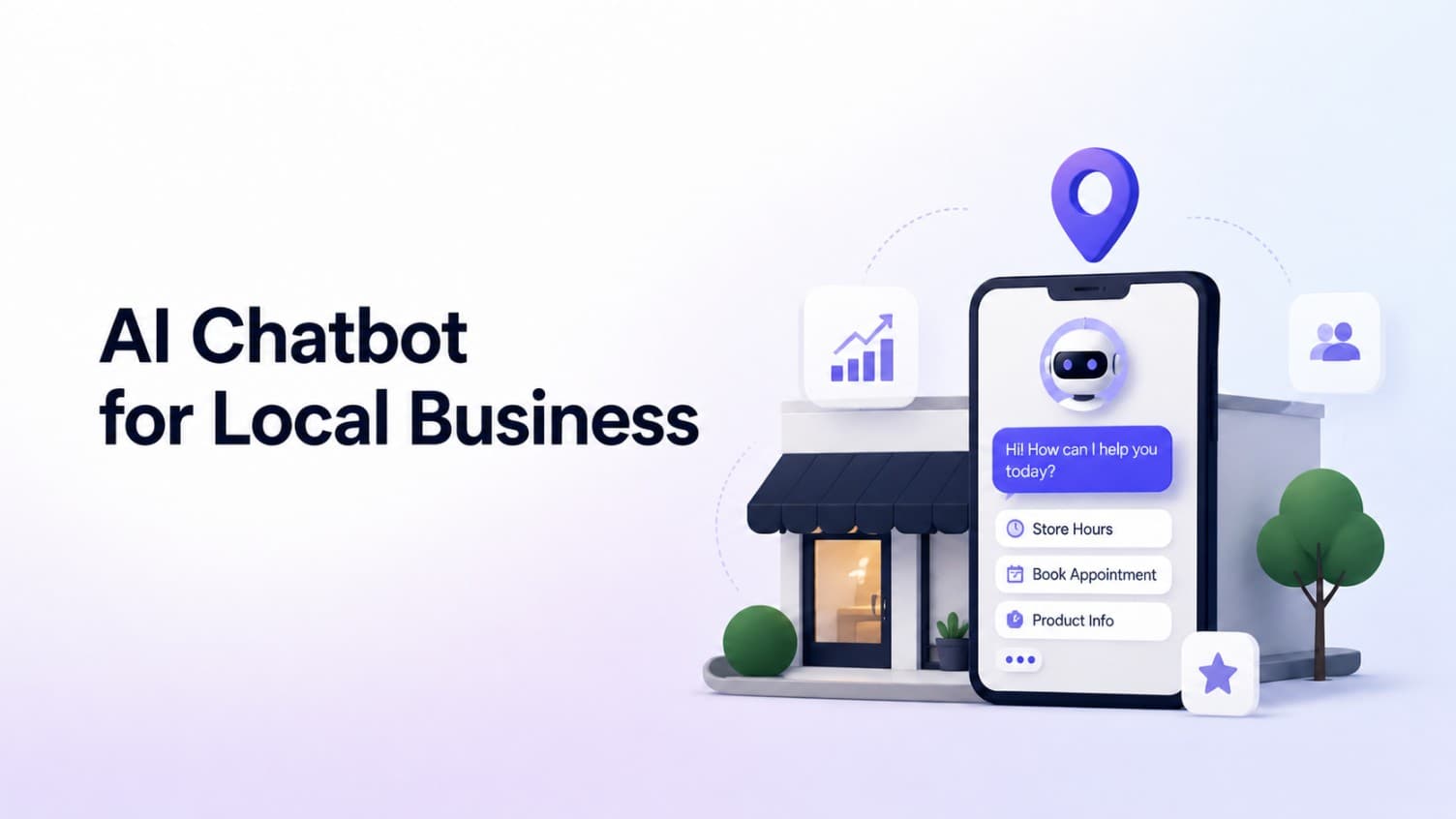
AI Chatbot for Small Local Businesses: A Practical Website Guide
A practical guide to AI chatbots for small business websites: what they answer, where they fit, and how local owners route visitors to booking or quote links.
 Leo Lee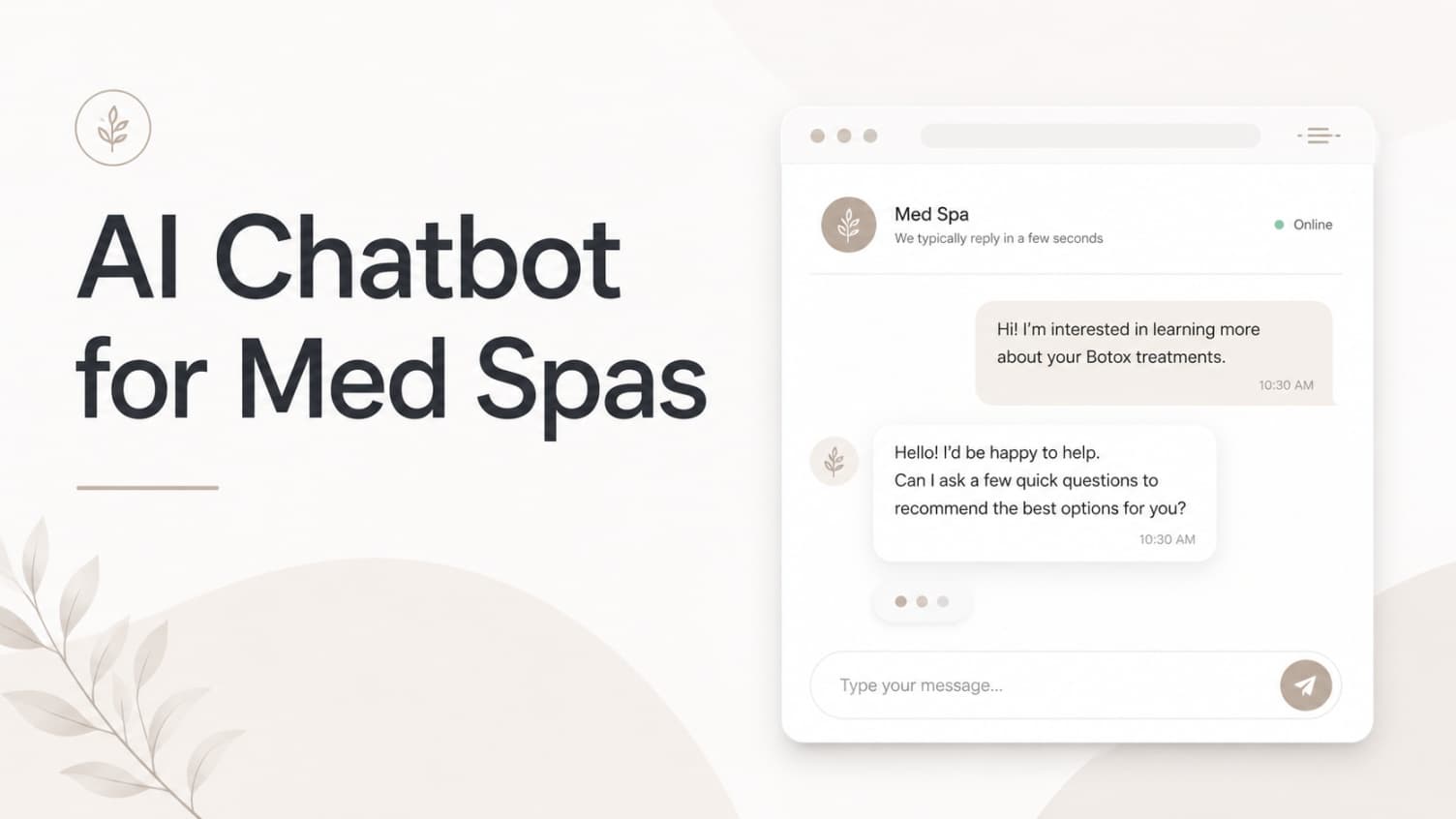
AI Chatbot for Med Spas: Route More Consult Requests from Your Website
A practical guide to med spa website chatbots: answer Botox, filler, laser, pricing, and consult questions, then route visitors to your existing booking path.
Leo Lee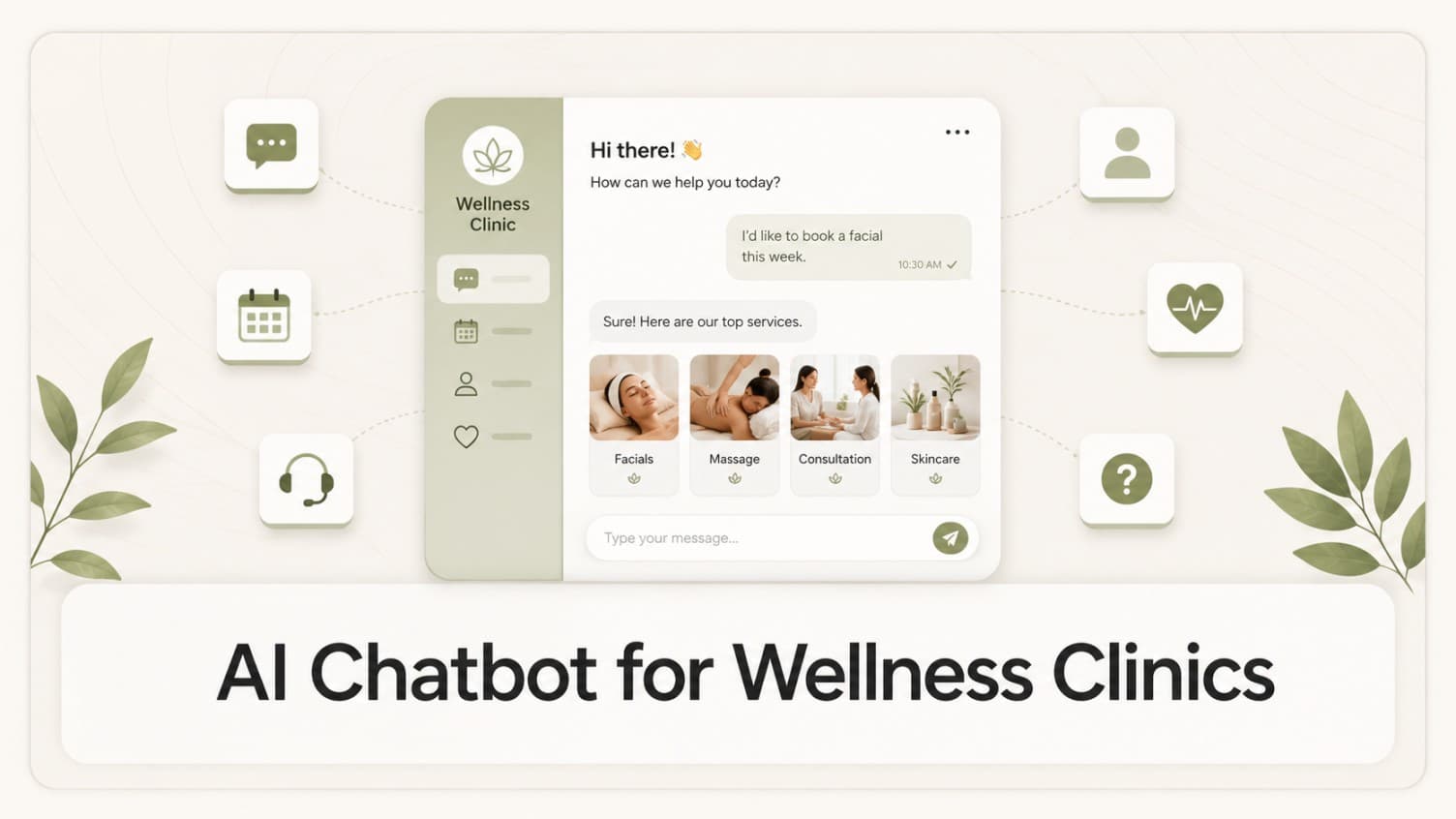
AI Chatbot for Wellness Clinics: Answer First-Visit Questions Faster
A practical guide to wellness clinic website chatbots: answer physio, chiro, massage, pilates, yoga, and IV drip first-visit questions, then route ready visitors to booking or intake.
Leo Lee