AI Chatbot for Med Spas: Route More Consult Requests from Your Website
A practical guide to med spa website chatbots: answer Botox, filler, laser, pricing, and consult questions, then route visitors to your existing booking path.
 Leo Lee10 min read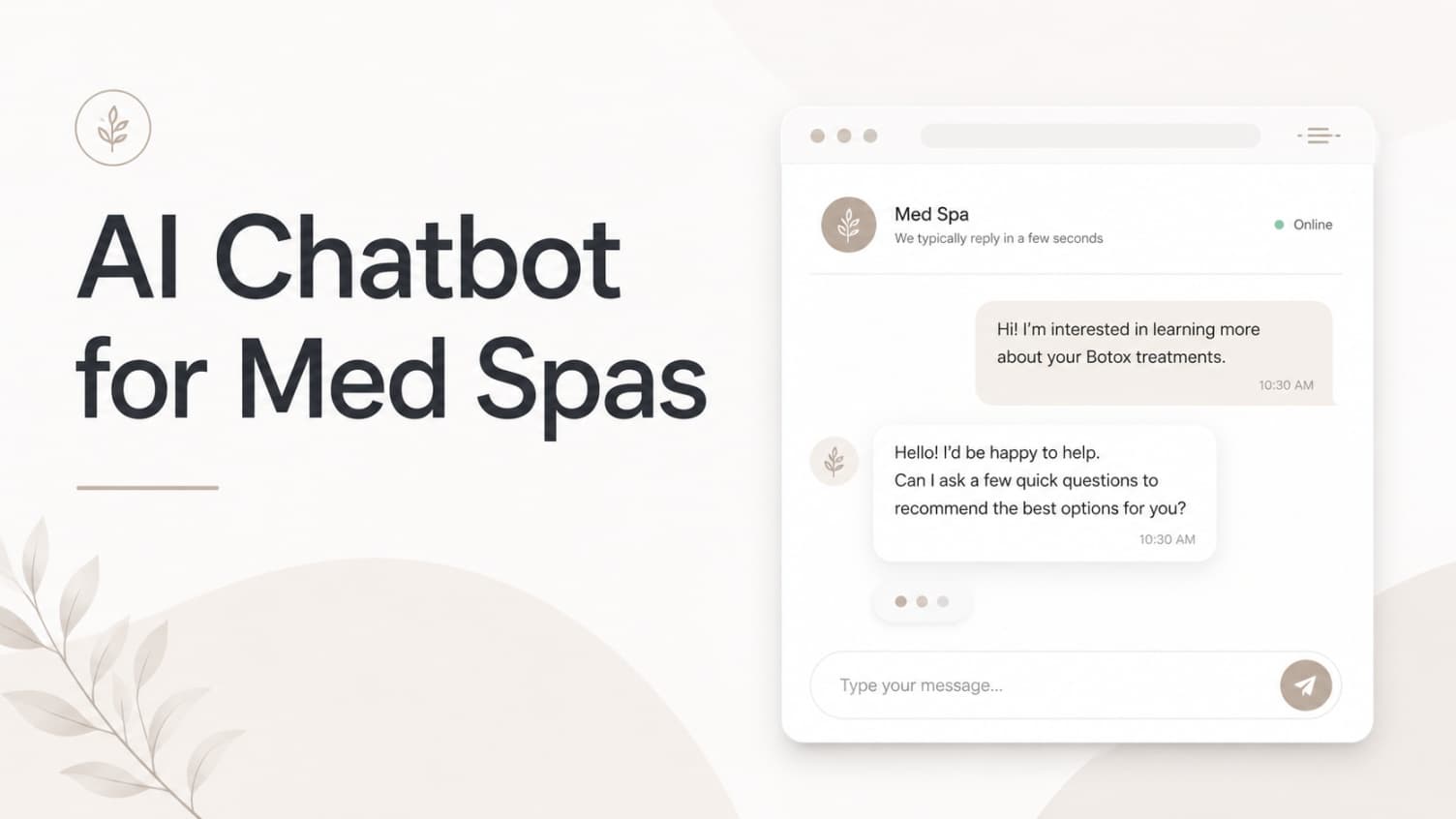
An AI chatbot for med spas should do one job well: answer the first website question and route the visitor to the right consultation, booking, call, or contact path before the lead goes cold.
That does not mean the chatbot should decide whether someone is a good candidate for Botox, fillers, laser hair removal, body contouring, or skin treatments. It should answer from the med spa's approved information, explain the next step, and send the visitor to the booking flow the clinic already uses.
For a small aesthetic clinic, that first response matters. Many visitors do not need a long sales pitch. They need a clear answer to "Do I need a consult?", "How much does this usually cost?", "Can I book online?", or "Is this something your clinic offers?"
CatchWhen is built for that layer. It sits on the website, answers common questions from the clinic's own content, and routes ready visitors to existing booking or contact links. No calendar rebuild. No tool switch. Just a faster path from question to consult request.
Quick answer
The best AI chatbot for med spas is not the one that talks the most. It is the one that can:
- Answer common treatment, pricing, policy, and consultation questions from approved clinic information
- Route ready visitors to the right booking, consultation, call, email, or contact link
- Handle after-hours website inquiries while the team is closed or in treatment rooms
- Admit when a question needs staff review instead of guessing
- Keep the existing booking system, form, or front-desk process in place
For most med spas, the practical setup is a med spa website chatbot that handles first response and routing. It should not replace clinical judgment, consent, intake, or the final consult.
That difference is important. A website chatbot can make the next step easier without pretending to be the provider.
Why med spa website leads go cold
Med spa visitors often compare clinics before they book. They look at service pages, before-and-after galleries, pricing language, staff credentials, location, reviews, and booking options.
The problem is that a website still leaves gaps.
A visitor may want to know whether they need a consultation before filler. They may wonder whether laser treatment works for their skin concern. They may want a price range before they commit. They may land on the site after the clinic is closed.
If the answer is not obvious, the visitor has three choices:
- Keep hunting through the website
- Submit a form and wait
- Open another clinic's website
That is where med spa lead capture breaks down. The visitor is interested, but the clinic's website cannot respond in the moment.
A chatbot does not need to close the sale. It needs to keep the conversation alive long enough for the visitor to take the next step.
What med spa visitors ask before they book
A useful med spa chatbot should be trained around real pre-consult questions, not generic customer support scripts.
Common visitor questions include:
- "Do you offer Botox or other neuromodulators?"
- "How much is lip filler?"
- "Do I need a consultation first?"
- "How long does the appointment take?"
- "What is the downtime?"
- "Can I book online?"
- "Do you offer laser hair removal for this area?"
- "What should I do before my appointment?"
- "Do you have memberships or packages?"
- "Where are you located?"
- "Can I talk to someone before booking?"
Some of those questions can be answered directly from approved website content. Some should be routed to a consultation or staff follow-up. The chatbot's value comes from knowing the difference.
For example, it can say that pricing depends on units, area, product, or consultation findings if that is how the clinic explains pricing. It can point to the consult booking link. It should not promise a treatment plan, guarantee a result, or tell the visitor that a procedure is right for them.
Where the chatbot fits in the consult flow
Most med spas already have a booking process. They may use Vagaro, Boulevard, Mangomint, Acuity, Mindbody, a website form, a phone call, or a staff-managed consult request process.
The chatbot should sit before that process.
The flow is simple:
- A visitor asks a question on the med spa website.
- The chatbot answers from approved service pages, FAQs, policies, and routing links.
- The visitor gets the right next step.
- The visitor books a consult, calls, emails, or submits a form through the existing path.
- The med spa team confirms and handles the real consultation as usual.
This is why CatchWhen starts as a Website Support Agent. It does not ask the clinic to throw away the booking process it already trusts. It helps more visitors reach that process with enough context to act.
For a broader version of this workflow, read AI Chatbot for Small Local Businesses.
Route more consult requests without replacing your booking tool
Some clinics search for an AI receptionist for med spa leads because they want every inquiry answered quickly. That can mean phone, SMS, Instagram, website chat, or all of them.
For a website-first launch, keep the job narrower. Start with the questions visitors already ask before booking, then route each intent to a clear next step.
| Visitor intent | Helpful chatbot answer | Best next step |
|---|---|---|
| Wants Botox, filler, laser, or facial treatment info | Summarize the clinic's published service description and who the consultation is for. | Show the consultation booking link or service page. |
| Asks about price | Give approved pricing guidance, such as ranges, starting prices, or "priced after consult" language. | Route to consult booking, pricing page, or staff contact. |
| Asks if a treatment is right for them | Explain that the team can review goals, history, and fit during a consultation. | Route to consultation or human follow-up. |
| Asks about prep, downtime, or aftercare | Share general clinic-approved prep or aftercare guidance if available. | Link to the relevant policy, service page, or staff contact path. |
| Wants to book now | Confirm the right booking path in plain language. | Show the booking link. |
| Asks a question the chatbot cannot safely answer | Say the team should review that question directly. | Show phone, email, or consult request options. |
This is the difference between a med spa booking chatbot that helps and one that adds noise. The visitor should not have to ask three more questions just to find the consult link.
Example med spa chatbot conversations
The best scripts are short. They answer the question, set the boundary, and show the next step.
Visitor: How much is lip filler?
Chatbot: Pricing depends on the product, amount used, and your goals. The team can review options during a consultation and explain the expected range before treatment.
Next steps:
- Book a consultation
- View filler services
- Contact the clinic
Visitor: Do I need a consult before Botox?
Chatbot: New clients usually start with a consultation so the provider can review your goals, medical history, and treatment plan. If you are ready, you can book the consult online.
Next steps:
- Book Botox consultation
- Ask another question
Visitor: Can laser hair removal work for my skin type?
Chatbot: That depends on your skin, hair, treatment area, and provider assessment. The safest next step is a consultation so the team can review fit and explain options.
Next steps:
- Book a laser consultation
- Call the clinic
The point is not to sound impressive. The point is to reduce friction. A good answer gives the visitor enough confidence to move forward without pretending the chatbot can replace a consultation.
Guardrails for med spa chatbot answers
Med spa chatbots need tighter boundaries than generic website chatbots.
Injectables, lasers, and aesthetic procedures are personal. Some questions are fine for a chatbot to answer from approved content. Others should go to licensed staff.
Use these guardrails:
- Do answer published service descriptions, consult process, hours, location, pricing guidance, booking steps, and policies.
- Do route treatment-fit, risk, contraindication, complication, and individualized medical questions to staff.
- Do avoid guarantees about results, recovery, safety, pain level, or candidacy.
- Do avoid collecting sensitive medical details in open website chat unless the clinic has intentionally designed that process.
- Do make phone, email, or consult booking easy when the chatbot reaches a boundary.
The FDA's consumer guidance on dermal fillers is a useful reminder that injectable procedures involve risks and licensed-provider judgment. For a chatbot, the practical translation is simple: answer process questions, but route individualized treatment questions to the clinic team. Source link checked May 17, 2026.
That boundary does not make the chatbot weaker. It makes it more trustworthy.
What to train the chatbot on
A med spa chatbot is only as useful as the information it can answer from.
Start with the content visitors actually need before they book:
- Service pages for injectables, fillers, laser, body contouring, facials, skin treatments, and memberships
- Consultation requirements and booking links
- Price ranges, starting prices, or approved "priced after consultation" language
- New-client instructions
- Prep and aftercare pages that the clinic already approves for public use
- Cancellation, deposit, late-arrival, and rescheduling policies
- Hours, location, parking, and contact details
- Staff-approved answers to common phone, form, email, and DM questions
- Links to booking, pricing, service, contact, and sign-in pages
Do not train it only on marketing copy. Marketing pages often describe the service but miss the details that block booking.
A visitor who asks about filler may not need a poetic service description. They may need to know whether a consult is required, how to book, what the clinic can discuss in the consult, and how to contact the team.
CatchWhen supports this setup by training from website content and FAQs, then using routing links to show the next action. If you need more concrete examples, the med spa website FAQ examples guide shows how to turn Botox, filler, laser, pricing, and policy questions into safer consult routes. If you are comparing categories, the broader best AI chatbot for website guide explains when a local-business chatbot is a better fit than a full support platform.
What to watch after launch
After the chatbot is live, judge it by visitor movement, not by how advanced the conversation sounds.
Watch for:
- Consult booking clicks from chatbot conversations
- After-hours questions about price, fit, downtime, or availability
- Repeated questions the chatbot could not answer
- Questions that should have routed to a consult but did not
- Broken or outdated booking, service, or contact links
- Answers that feel too long on mobile
CatchWhen is a strong fit when your med spa already has a website and a booking or consult path, but visitors still leave with unanswered questions. It is less useful if the site has almost no traffic, the clinic has no clear next step, or the team has not approved safe answers yet.
For setup, see the website embed guide. For plan details, see CatchWhen pricing.
AI chatbot for med spas FAQ
What should an AI chatbot for med spas do?
It should answer common website questions from approved clinic information and route ready visitors to consultation, booking, call, email, or contact paths. It should not diagnose, decide treatment fit, guarantee results, or replace the provider consultation.
Can a med spa chatbot answer pricing questions?
Yes, if the clinic has approved pricing guidance for the chatbot to use. That may be a starting price, range, membership note, or explanation that final pricing depends on consultation, treatment area, product, or units.
Should a chatbot answer medical or treatment-fit questions?
It can explain the clinic's general consultation process, but individualized fit, risks, contraindications, complications, and treatment recommendations should route to licensed staff or a consultation.
The practical takeaway
An AI chatbot for med spas should not try to be the provider, the booking system, and the front desk all at once.
The useful version has a narrower job. It answers the first question from approved clinic information, respects safety boundaries, and routes the visitor to the next step while interest is still fresh.
For a med spa website, that next step is usually a consultation, booking link, phone call, email, or contact form. The chatbot's job is to make that path obvious.
Answer the question. Set the boundary. Route the consult request.

Article by
Leo Lee
Leo Lee is the founder and builder of CatchWhen, a Customer Support AI System that creates AI Support Agents for appointment-based local businesses. CatchWhen helps med spas, salons, wellness clinics, and other independent service businesses answer customer-facing website inquiries and route ready leads into the booking, quote, or contact tools they already use. Leo writes about the workflows, guardrails, and infrastructure behind production-ready AI customer support agents.
Keep reading
AI Chatbot for Small Local Businesses: A Practical Website Guide
A practical guide to AI chatbots for small business websites: what they answer, where they fit, and how local owners route visitors to booking or quote links.
 Leo Lee
AI Chatbot for Wellness Clinics: Answer First-Visit Questions Faster
A practical guide to wellness clinic website chatbots: answer physio, chiro, massage, pilates, yoga, and IV drip first-visit questions, then route ready visitors to booking or intake.
Leo Lee
Best AI Chatbot for Your Website in 2026: 8 Options Compared
Compare the best AI chatbot options for website use cases, from local business lead capture to support automation, CRM chatflows, and developer agents.
Leo Lee