How Much Does an AI Chatbot Cost for a Small Business in 2026?
Verified AI chatbot pricing for small businesses in 2026: real monthly costs, hidden fees, and a 10-minute worksheet to estimate your own number.
 Leo Lee11 min read
For most small businesses, an AI chatbot for your website costs between $0 and $150 per month on a subscription plan. Many start free, and the most common paid range for a small team is roughly $25 to $80 per month.
So why do some articles say an AI chatbot costs $50,000?
Because two completely different products share one search result. This guide explains the difference, shows verified 2026 prices from real pricing pages, lists the hidden costs that change your real number, and gives you a 10-minute worksheet to estimate what your own website would actually cost. All prices below were checked on the vendors' official pricing pages on June 11, 2026.
Quick answer
The AI chatbot cost for a small business depends on which of these you are buying:
- A subscription chatbot platform. You install a widget, train it on your content, and pay monthly. Free plans exist. Paid plans for small businesses mostly run $25 to $150 per month.
- A custom-developed chatbot. An agency or developer builds software for you. Quotes commonly start around $5,000 and can reach six figures for enterprise projects.
If you run a salon, med spa, clinic, or another local service business, you almost certainly want the first one. Custom development is for companies with unusual workflows, deep system integrations, or compliance requirements that off-the-shelf platforms cannot meet.
The rest of this guide is about subscription pricing, because that is the decision a small business owner is actually making.
Why chatbot cost answers contradict each other
Search for chatbot pricing and you will find one article saying $29 per month and another saying $75,000. Neither is wrong. They are describing different markets.
Development agencies write about the cost of building chatbot software from scratch: design, engineering, integrations, and maintenance. Those numbers are real for enterprises, and irrelevant for a business that needs to answer "how much is balayage?" at 10pm.
Subscription platforms write about their own plans, which usually means the headline price looks small and the limits live in the fine print.
A useful budget needs three numbers, not one:
Weak way to budget: "It starts at $29 a month, so it costs $29 a month."
Better way to budget: "It starts at $29 a month for 2,000 messages. At my traffic, I expect to stay under that, and if I grow past it the next tier is $79. So my realistic range is $29 to $79."
The second version takes five extra minutes and prevents the surprise bill, which is the thing owners actually fear more than the subscription itself.
The four pricing models in plain language
Almost every chatbot subscription uses one of four models. The model matters more than the headline price because it decides how your bill behaves when your website gets busy.
Flat monthly plans. You pay a fixed price for a quota of responses, messages, or conversations. Predictable, easy to budget, and the most common choice for small businesses. The risk is hitting the quota ceiling in a busy month, so check what happens at the limit before you buy.
Message or credit pricing. You buy credits and each AI reply consumes them. Easy to start, but cost tracks usage, and a traffic spike or a chatty visitor consumes more than you planned.
Per-resolution pricing. You pay only when the AI fully resolves a conversation. It sounds fair, and for high-volume support teams it can be. For a small business it is hard to forecast: you cannot know in advance how many conversations next month will count as resolved.
Per-seat pricing. You pay for each team member who uses the platform. This fits support teams with shared inboxes more than owner-operated local businesses, where one or two seats are enough and the seat price often bundles tools you will not use.
For a deeper comparison of tools across these models, see Best AI Chatbot for Your Website. For pricing purposes, the short version is: an affordable AI chatbot for a small business is usually a flat plan you can forecast, not the model with the cleverest billing math.
Verified starting prices for 2026
These are current starting prices from official pricing pages, checked June 11, 2026. Prices change, so treat this as a snapshot and confirm on the linked page before buying.
| Platform | Free plan | Paid entry point | Pricing model |
|---|---|---|---|
| CatchWhen | Yes | $29/mo Standard, $79/mo Pro | Flat plans with monthly response limits. |
| Chatbase | Yes, 50 message credits | $32/mo Hobby billed annually | Message credits; extra credits $40 per 1,000. |
| Tidio | Yes | From $24.17/mo billed annually | Plan price plus a separate Lyro AI conversation quota. |
| Botpress | Yes, 100 conversations/mo | $189/mo Plus, 250 conversations included | Conversation packs; extras at $0.65 per conversation. |
| Landbot | Trial | EUR 32/mo Starter billed annually | Chat and AI-chat quotas per plan. |
| Intercom Fin | Trial | Seat plans plus $0.99 per resolution | Per-seat base plus per-outcome AI fee. |
| Zendesk | Trial | $19/agent/mo Support, $55/agent/mo Suite Team, billed annually | Per-agent suite; AI resolutions beyond plan allotment billed separately. |
Two patterns are worth noticing.
First, the cheapest advertised number is usually the annual-billing rate. Tidio's $24.17 and Chatbase's $32 require paying for a year upfront; month-to-month rates are higher.
Second, platforms built for support teams (Intercom, Zendesk) price per seat or per resolution because their buyers have agents handling volume. Platforms built for small businesses price flat because their buyers need a forecastable bill. Match the model to the business you actually run.
The hidden costs that change your real number
The plan price is the start of the math, not the end. Before you commit, check each of these:
- Annual versus monthly billing. The advertised price is often the annual rate. Multiply the monthly rate by 12 and compare before deciding which discount is real for you.
- AI as an add-on. On some platforms the base plan covers live chat, and the AI agent is a separate quota or add-on. Confirm the price you saw includes the AI actually answering.
- Overage behavior. What happens at the quota limit? Some platforms sell extra credits, some pause the AI, some hide the widget until the next cycle. None of these are wrong, but you should know which one you bought.
- Branding removal. Removing the platform's logo from your widget can cost extra. Chatbase, for example, prices branding removal at $1,188 per year as an add-on.
- Seats you do not need. Per-seat platforms bundle inbox and reporting tools. If only you and a front-desk manager will ever look at it, you are paying for team features built for ten agents.
- Your own setup time. Training the chatbot on your services, prices, and policies takes real hours. Platforms that train from your existing website content shrink this cost; platforms that need hand-built conversation flows grow it.
- The switching rebuild. If you outgrow a tool, the next one will not import your flows. Choosing a tool that fits your next twelve months is cheaper than rebuilding in six.
None of these costs are scandalous. They are just absent from headline prices, which is why two businesses on the "same" $29 plan can have very different real bills.
Estimate your own cost in 10 minutes
You do not need a sales call to get a realistic number. You need four estimates and a pricing page.
Step 1: Find your monthly website visitors. Pull this from your analytics. If you have no analytics, your booking platform or website host usually shows basic traffic.
Step 2: Estimate conversations. Only a fraction of visitors open a chat. If you have no data yet, run the math at 1% and 3% of visitors and treat those as placeholder assumptions to replace with your real numbers after the first month. For a site with 2,000 monthly visits, that bracket is 20 to 60 conversations a month.
Step 3: Convert to the platform's billing unit. A flat-plan platform counts responses or messages; a conversation usually contains several. If a typical chat runs 4 to 6 AI replies, 20 to 60 conversations is roughly 80 to 360 messages. Check the unit the plan actually meters before comparing quotas.
Step 4: Place yourself on the pricing page. Find the cheapest plan whose quota covers your Step 3 estimate with room to spare, then read what happens if you exceed it. That plan price, plus the overage behavior you can live with, is your realistic monthly cost.
Run the same four steps against two or three platforms and the comparison stops being abstract. A med spa with 3,000 monthly visitors and a 5-minute average response gap is not choosing between "cheap and expensive." It is choosing between a $29 flat plan it will probably never max out and a per-resolution model whose bill it cannot predict.
If your Step 2 number lands under a free plan's quota, start free. The free tier is the honest way to learn your real conversation volume before paying for capacity you might not need.
When you should not buy a chatbot yet
An honest cost guide should say when the answer is "spend nothing."
Skip the chatbot for now if:
- Your website gets almost no visitors. A chatbot answers people who show up. If traffic is near zero, spend the budget on the website and local listings first.
- Nearly all inquiries arrive by phone or walk-in. A website chatbot fixes website silence. If your leak is missed calls, an answering service or AI receptionist fits better, and that is a different product with different pricing.
- You need live human chat. If your customers expect a person in the chat window during business hours, a staffed live-chat tool is the right spend, and several platforms in the table above sell exactly that.
- Your services, prices, and policies are not written down anywhere. The chatbot can only answer from approved content. Writing that content costs nothing and improves your website even if you never buy software.
A chatbot is a small monthly cost, but it is still a real one. It earns its keep when there are actual website inquiries going unanswered, which for appointment businesses usually means evenings, weekends, and mid-service hours.
Where CatchWhen fits in this math
CatchWhen uses the model this guide recommends for small local businesses: flat plans with a clear quota. The pricing page lists a free plan, Standard at $29 per month, and Pro at $79 per month, with a discount for yearly billing. When a plan's monthly response limit is reached, the widget hides from new visitors until the next cycle or an upgrade, so the bill never grows on its own.
The fit logic from the worksheet applies here too. CatchWhen is built for appointment-based businesses whose websites get real visitor questions: it trains on your website and FAQs, answers the first question, and routes ready visitors to the booking or contact path you already use. If your inquiry leak is phone-first, or you want staffed live chat, a different tool deserves your budget.
For what the setup process involves before any plan choice, see the website chatbot launch checklist. For the broader framework, read AI Chatbot for Small Local Businesses.
AI chatbot cost FAQ
How much does an AI chatbot cost per month for a small business?
Most small businesses pay between $0 and $150 per month on subscription platforms, with $25 to $80 being the most common paid range. The exact number depends on your conversation volume and whether the platform bills flat plans, message credits, resolutions, or seats. Verify current prices on the vendor's pricing page, since plans change.
Is a free AI chatbot plan actually free?
Free plans are real but capped: limited messages, sources, or features, and sometimes platform branding on the widget. They are best used to measure your real conversation volume for a month or two. If the quota fits your traffic permanently, free can genuinely be enough.
Why do some chatbot quotes cost $10,000 or more?
Those quotes are for custom chatbot development, where an agency builds and maintains software for your specific systems. That market exists for enterprises with complex integrations. A small business installing a trained widget on its website is buying a subscription product, not a development project.
Do per-resolution pricing models save money?
Sometimes, for teams with high volume and good deflection rates. For a small business the problem is forecastability: you pay per successfully resolved conversation, so the bill depends on outcomes you cannot predict month to month. A flat plan trades a little theoretical efficiency for a number you can budget.
The practical takeaway
The AI chatbot cost question has a calmer answer than the search results suggest: for a small business, this is a $0 to $150 per month decision, not a $50,000 one.
Get your traffic number, estimate your conversations, check the quota and the overage rule, and pick the pricing model that behaves predictably when your website gets busy. Source prices in this post were checked June 11, 2026, and they will drift, so confirm on the pricing page before you commit.
Budget for the bill you can forecast. The chatbot's job is to stop your website from going silent, not to become the next subscription you are afraid to open.

Article by
Leo Lee
Leo Lee is the founder and builder of CatchWhen, a Customer Support AI System that creates AI Support Agents for appointment-based local businesses. CatchWhen helps med spas, salons, wellness clinics, and other independent service businesses answer customer-facing website inquiries and route ready leads into the booking, quote, or contact tools they already use. Leo writes about the workflows, guardrails, and infrastructure behind production-ready AI customer support agents.
Keep reading
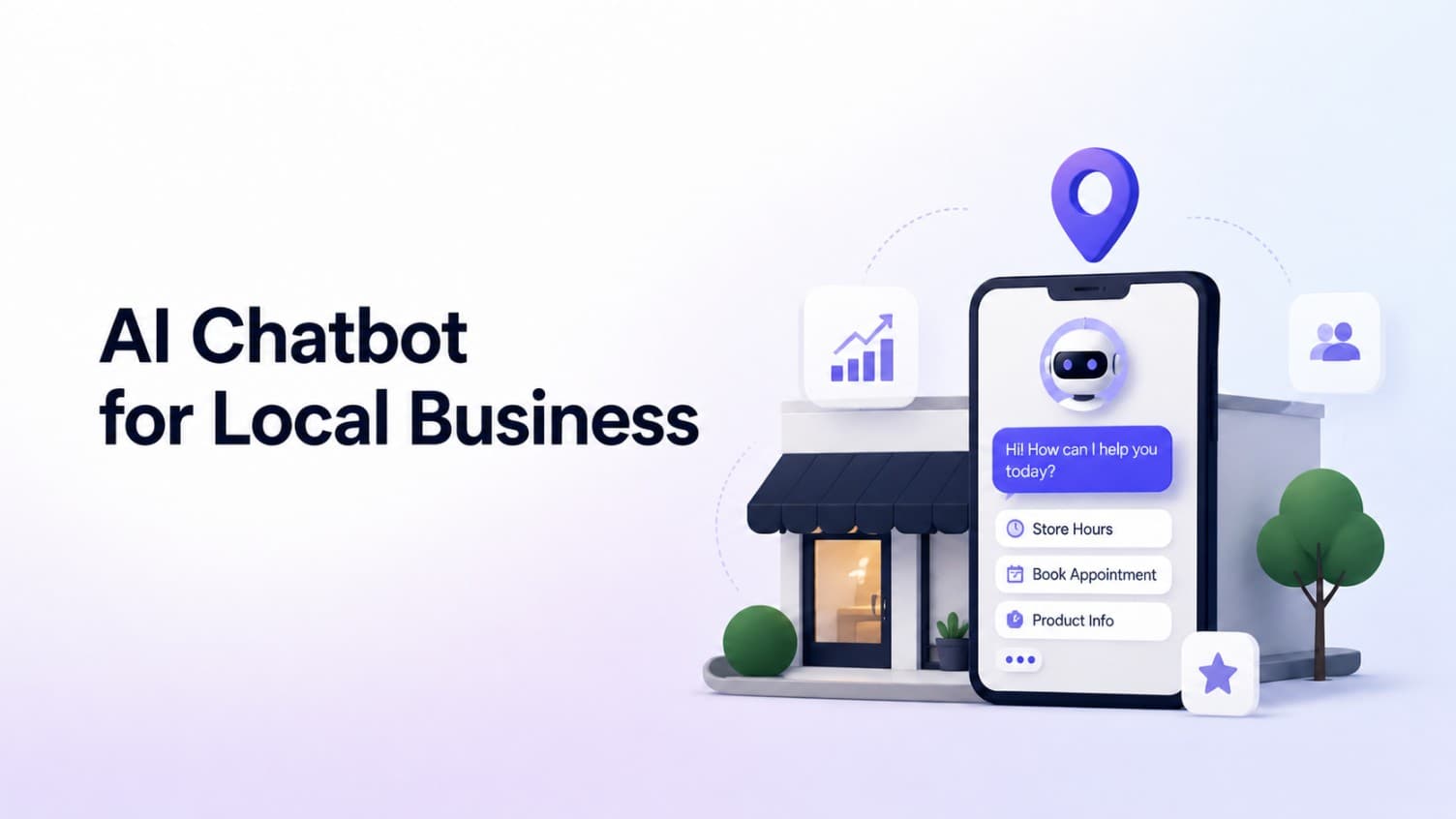
AI Chatbot for Small Local Businesses: A Practical Website Guide
A practical guide to AI chatbots for small business websites: what they answer, where they fit, and how local owners route visitors to booking or quote links.
 Leo Lee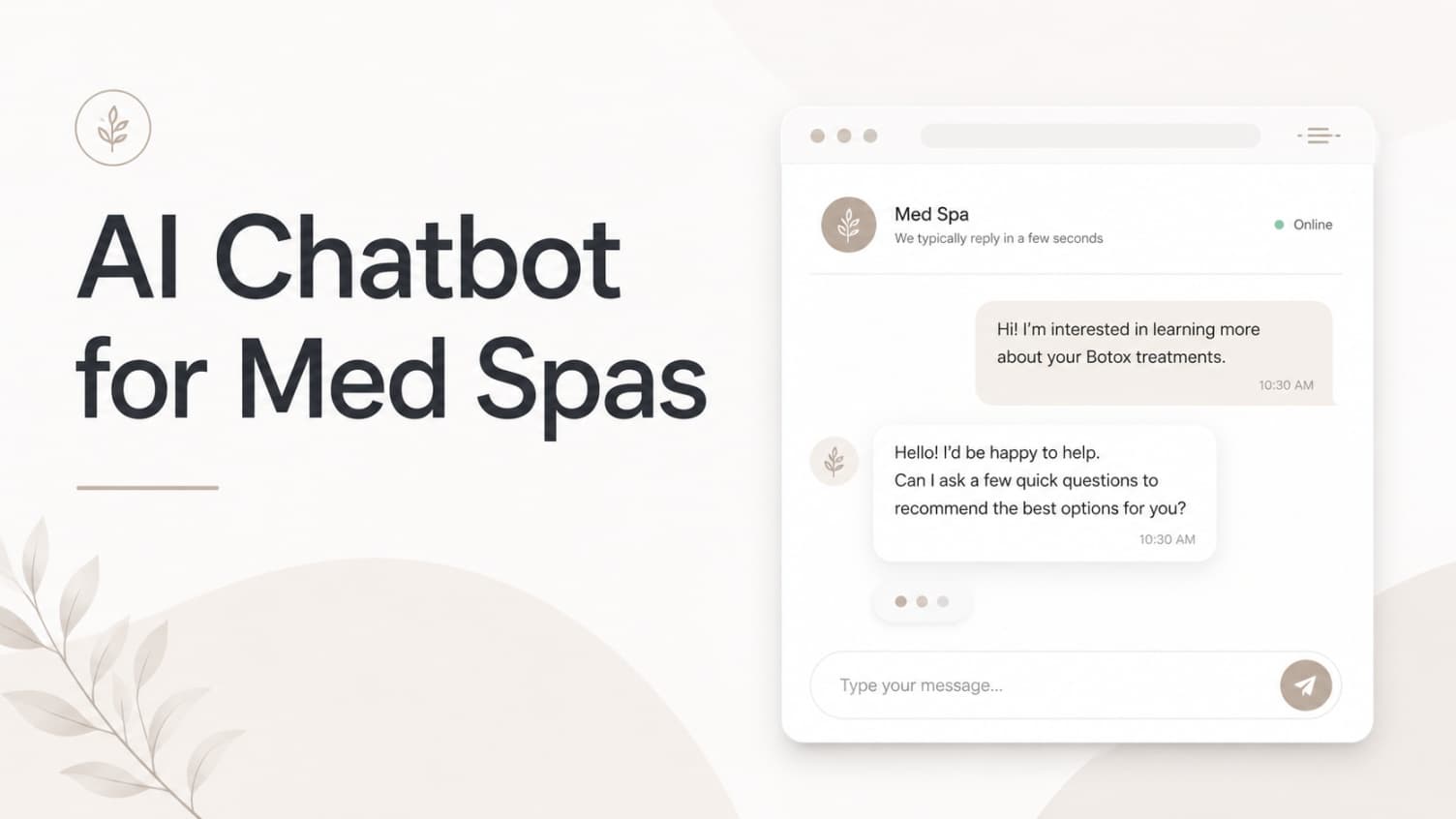
AI Chatbot for Med Spas: Route More Consult Requests from Your Website
A practical guide to med spa website chatbots: answer Botox, filler, laser, pricing, and consult questions, then route visitors to your existing booking path.
Leo Lee
AI Chatbot for Wellness Clinics: Answer First-Visit Questions Faster
A practical guide to wellness clinic website chatbots: answer physio, chiro, massage, pilates, yoga, and IV drip first-visit questions, then route ready visitors to booking or intake.
Leo Lee