The Future of Customer Service for Small Businesses: AI First Response, Human Trust
A practical future of customer service guide for small businesses: use AI for first response, routing, context, and trust-preserving human handoff.
 Leo Lee11 min read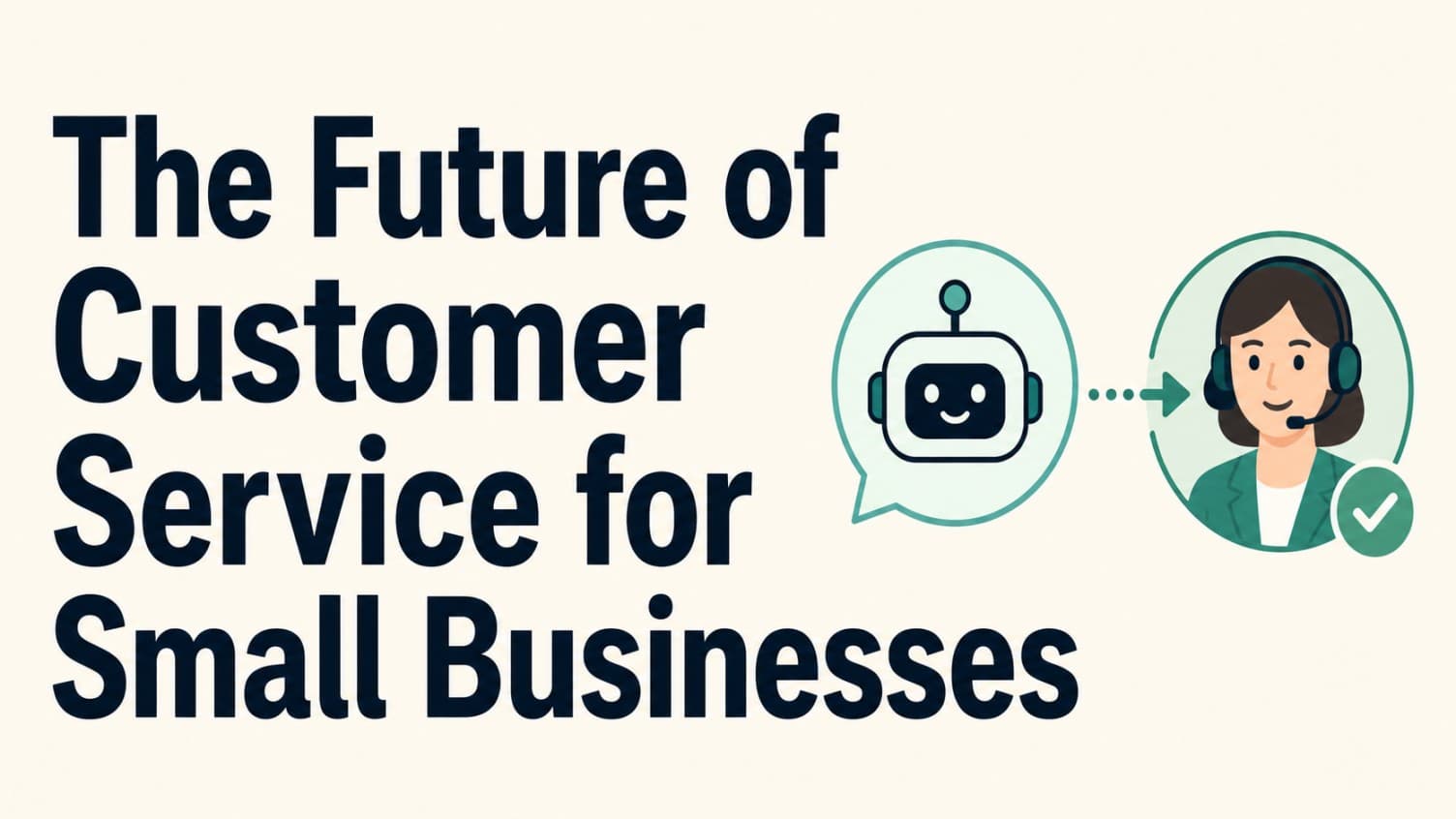
The future of customer service for small business is not a chatbot that replaces the owner, the front desk, or the service team.
It is a faster first response, a cleaner next step, and a better handoff when a person should make the call.
For a med spa, that may mean answering "Do I need a consultation first?" before the visitor leaves the website. For a salon, it may mean helping a new client choose between a color consult and a full appointment. For a wellness clinic, it may mean explaining what to bring to a first visit and routing the person to booking or intake.
The pattern is simple: AI handles speed and context. Humans handle judgment and trust.
That is the customer service model small businesses should prepare for.
Quick answer: the future is AI first response plus human trust
Small business customer service is moving away from scattered inboxes and slow callbacks toward a front-desk style support layer that can:
- answer common questions instantly
- collect the details staff need later
- route customers to booking, quote, call, or contact paths
- keep risky or emotional decisions with a person
- show the business what customers keep asking
That does not mean every customer interaction should be automated.
It means the first version of customer service should stop making customers wait for answers the business already knows.
Salesforce describes the future of AI in customer service as AI and humans working side by side, with AI handling automation and humans focusing on higher-value interactions. IBM's future of AI in customer service guide makes a similar point: AI is becoming part of service operations, especially for routine work, self-service, and workflow support.
For a small local business, translate that carefully. You probably do not need an enterprise contact center. You need a reliable way to answer the first question and preserve trust when the answer needs a person.
Source links in this article were checked June 5, 2026.
Why the future is not chatbot-only customer service
The weak version of this trend sounds like this:
"Let the AI handle customers so the team does not have to."
That is the wrong goal for a local business.
Customers choose local service providers because they want confidence. They want to know whether the business can help, what the next step is, and whether a real person will step in when the situation is personal, expensive, emotional, or unclear.
That is why chatbot-only service often feels risky. It can be fast, but it can also feel like a wall.
The better future is AI-supported service:
- AI answers what is known.
- AI admits what it cannot decide.
- AI routes the customer to the right next step.
- AI keeps context so the customer does not repeat everything.
- Humans handle judgment, exceptions, and relationship moments.
Talkdesk reported in October 2025 that 51% of surveyed U.S. small businesses had already integrated AI into customer service operations. The same release said concerns among non-users included relevance, losing the personal touch, and perceived complexity. Talkdesk commissioned Pollfish to survey 400 U.S. small business owners in August 2025.
Those concerns are reasonable. A small business cannot afford a support layer that feels fake, confuses customers, or creates cleanup work.
The future is not "more AI everywhere." It is better separation of responsibilities.
The AI-first, human-trust operating matrix
Use this matrix to decide what future customer service should look like in a small local business. Scan it by customer moment first, then decide what AI can safely do before a person steps in.
Common service question
Can you help with this?
- AI first
Answer from approved website, FAQ, and policy content.
- Human owns
Update the source content when answers change.
- Trust rule
If the answer is not in the business knowledge, say so and route.
Price or estimate question
How much does this cost?
- AI first
Explain documented ranges, variables, or where pricing is listed.
- Human owns
Final quote, package recommendation, discount, or exception.
- Trust rule
Never invent a final price.
Booking confusion
What should I book?
- AI first
Explain the right booking path and link to it.
- Human owns
Final confirmation, reschedule exception, or waitlist decision.
- Trust rule
Do not claim live availability unless connected to a real calendar.
Consult or eligibility question
Is this right for me?
- AI first
Explain the general process and route to consultation.
- Human owns
Medical, legal, financial, or personal eligibility decision.
- Trust rule
Answer process, not candidacy.
Complaint or frustration
I need someone to fix this.
- AI first
Acknowledge, collect context, and route to staff.
- Human owns
Apology, resolution, refund, policy exception, or relationship repair.
- Trust rule
Do not argue, defend, or promise a fix.
After-hours inquiry
Will someone answer me?
- AI first
Answer known questions and collect next-step details.
- Human owns
Follow-up, confirmation, and any judgment call.
- Trust rule
Be clear about when a person will review it.
Repeat question pattern
People keep asking this.
- AI first
Surface what customers keep asking.
- Human owns
Decide whether to update the website, FAQ, pricing, or booking flow.
- Trust rule
Repeated confusion is a business signal.
This is the practical future of customer service: not one big bot, but a role split that customers can trust.
AI should be visible enough to set expectations. Human support should be reachable enough to keep confidence.
What AI should own in the next version of customer service
AI should own the moments where speed matters and the answer can be grounded in approved business information.
For local businesses, that usually starts with website questions.
A customer visiting your site may ask:
- "How much does this usually cost?"
- "Do I need a consultation first?"
- "Can I book online?"
- "Which service should I choose?"
- "Do you take new clients?"
- "What should I do before my first visit?"
- "Can I request a quote tonight?"
- "Will someone call me back?"
These questions interrupt the day because they are small but urgent. They happen while the owner is with a client, while the front desk is on the phone, or after the business is closed.
That is where an AI first-response layer helps. It does not need to run the business. It needs to answer the first question from the business's real content and route the customer to the next step.
If you want the broader reasoning behind this starting point, the AI customer service for small business guide explains why the website is usually the safest first channel.
What humans should still own
The future of customer service still needs people. It just needs people in the right moments.
Humans should own:
- final medical, legal, financial, or safety judgment
- treatment candidacy or personalized advice
- final pricing, discounts, refunds, and policy exceptions
- emotional complaints or relationship repair
- staff scheduling decisions and live availability exceptions
- promises that depend on inventory, calendar, provider review, or local rules
- changes to the source material the AI uses
This boundary protects both sides.
The customer gets speed without being trapped. The business gets leverage without pretending the AI can make decisions it cannot verify.
The U.S. Small Business Administration's AI guidance is useful here because it tells small businesses to start small, review AI output, protect sensitive information, and keep customer trust in mind. In customer service, that means AI should support the relationship, not hide the person behind it.
If you need a deeper version of the handoff rules, use the AI chatbot handoff to human guide.
The website becomes the first customer service channel
Most small businesses think customer service begins when someone calls, texts, emails, or submits a form.
That is already too late.
For appointment and quote-based businesses, customer service often begins on the website, before the customer has decided to book.
The visitor is trying to answer a practical question:
- "Is this the right service for me?"
- "Can I afford this?"
- "Will this business respond?"
- "Is booking worth the effort?"
- "Do I need to talk to someone first?"
If the website cannot help, the customer either waits, calls, sends a vague message, or compares another provider.
The future customer service model starts earlier. It turns the website into a first-response front desk:
- The visitor asks a question.
- The AI answers from approved business knowledge.
- The AI routes to booking, quote, call, contact, or consultation.
- If the question needs judgment, the AI collects context and hands off.
- The business reviews repeated questions to improve the website and support content.
That is a smaller promise than omnichannel automation. It is also more useful for many small businesses.
If you want the broader website support model, start with the AI chatbot for small business website guide. If you want the automation stack after that, read the customer support automation 2026 playbook.
A 10-question readiness check
Before adding AI to customer service, answer these questions.
- What are the 10 questions customers ask before they book, request a quote, or call?
- Which of those questions already have approved answers on your website?
- Which answers change often enough that staff should review them before automation?
- Which questions should route to booking?
- Which questions should route to a quote or contact form?
- Which questions should route to a human because they require judgment?
- What should the AI say when it does not know?
- What customer details should be collected before a staff follow-up?
- Who reviews unanswered or repeated questions each week?
- What would make a customer feel trapped, misled, or ignored?
If you cannot answer these yet, do not start with a complicated automation project.
Start by documenting your best answers, your routing paths, and your handoff rules.
That is how small businesses make AI feel more trustworthy: not by making it sound more human, but by making it more honest about what it can and cannot do.
Where CatchWhen fits
CatchWhen is built for the website-first version of this future.
It is a Customer Support AI System that creates a business-specific AI Support Agent. The current product starts with a Website Support Agent: it answers customer-facing website inquiries from business knowledge and routes ready visitors to the booking, quote, call, or contact path the business already uses.
That scope matters.
CatchWhen is not trying to replace your booking system, CRM, front desk, or staff judgment. It sits above the tools you already use and handles the first-response layer on your website.
For a local business, that is usually the right first step:
- lower risk than automating every channel
- close to the customer questions that block booking
- easier to train from website and FAQ content
- useful before the team changes calendars, CRMs, or intake workflows
- clear human handoff when the AI should stop
Future customer service will likely span more channels. But the first reliable layer should answer the customer who is already on your site.
FAQ
Will AI replace customer service for small businesses?
No. The healthier model is AI first response plus human trust. AI can answer common questions, collect context, and route customers, but people should still own judgment, exceptions, sensitive situations, and relationship-heavy moments.
What is the safest first customer service channel to automate?
For many appointment and quote-based local businesses, the website is the safest first channel. The content is more controlled, the customer is already evaluating the business, and the next step can usually be booking, quote, call, contact, or consultation.
What should AI never handle in small business customer service?
AI should not make medical, legal, financial, safety, final pricing, refund, policy exception, or live availability decisions unless the business has a verified system and human-approved rules behind that claim. When in doubt, it should answer process questions and route the person to staff.
How do small businesses keep AI customer service personal?
Keep the answers specific to the business, make handoff easy, avoid fake certainty, and review repeated questions. Personal service is not only tone. It is whether the customer gets a clear answer, an honest limit, and a path to a real person when needed.
Takeaway
The future of customer service for small businesses is not a choice between AI and people.
It is a better division of labor.
AI should answer the first question, preserve context, and route the customer clearly. Humans should handle trust, judgment, exceptions, and follow-through.
For local businesses, the best place to start is usually the website. That is where many customer questions already begin, and where one clear answer can keep a good lead from going cold.

Article by
Leo Lee
Leo Lee is the founder and builder of CatchWhen, a Customer Support AI System that creates AI Support Agents for appointment-based local businesses. CatchWhen helps med spas, salons, wellness clinics, and other independent service businesses answer customer-facing website inquiries and route ready leads into the booking, quote, or contact tools they already use. Leo writes about the workflows, guardrails, and infrastructure behind production-ready AI customer support agents.
Keep reading
AI Chatbot for Small Local Businesses: A Practical Website Guide
A practical guide to AI chatbots for small business websites: what they answer, where they fit, and how local owners route visitors to booking or quote links.
 Leo Lee
AI Chatbot for Med Spas: Route More Consult Requests from Your Website
A practical guide to med spa website chatbots: answer Botox, filler, laser, pricing, and consult questions, then route visitors to your existing booking path.
Leo Lee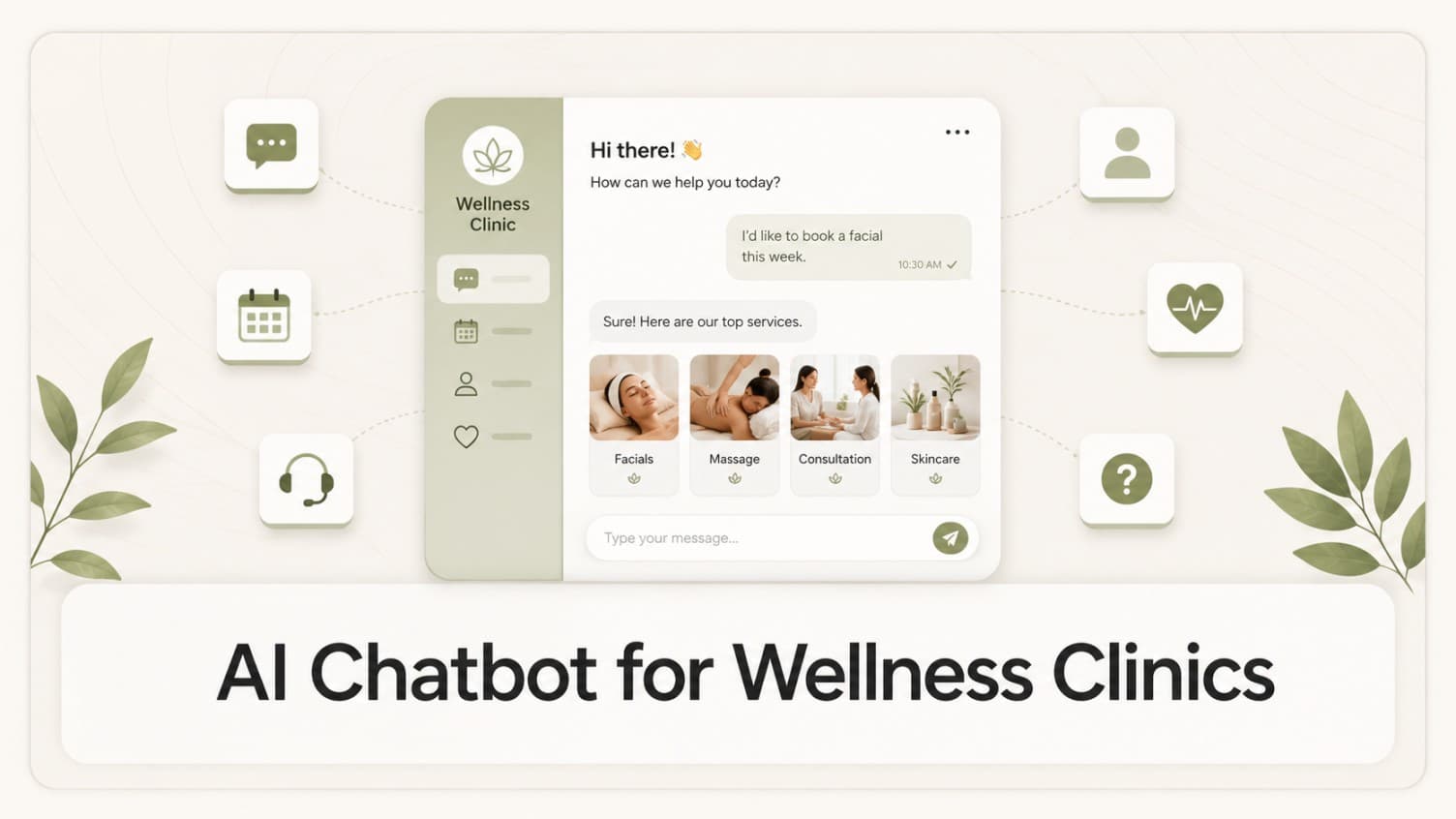
AI Chatbot for Wellness Clinics: Answer First-Visit Questions Faster
A practical guide to wellness clinic website chatbots: answer physio, chiro, massage, pilates, yoga, and IV drip first-visit questions, then route ready visitors to booking or intake.
Leo Lee