Do Reviews Affect AI Recommendations? Local Business Review Checklist for 2026
Learn how reviews affect AI recommendations for local businesses, what AI tools may read, and how to build an honest review surface customers can verify.
 Leo Lee11 min read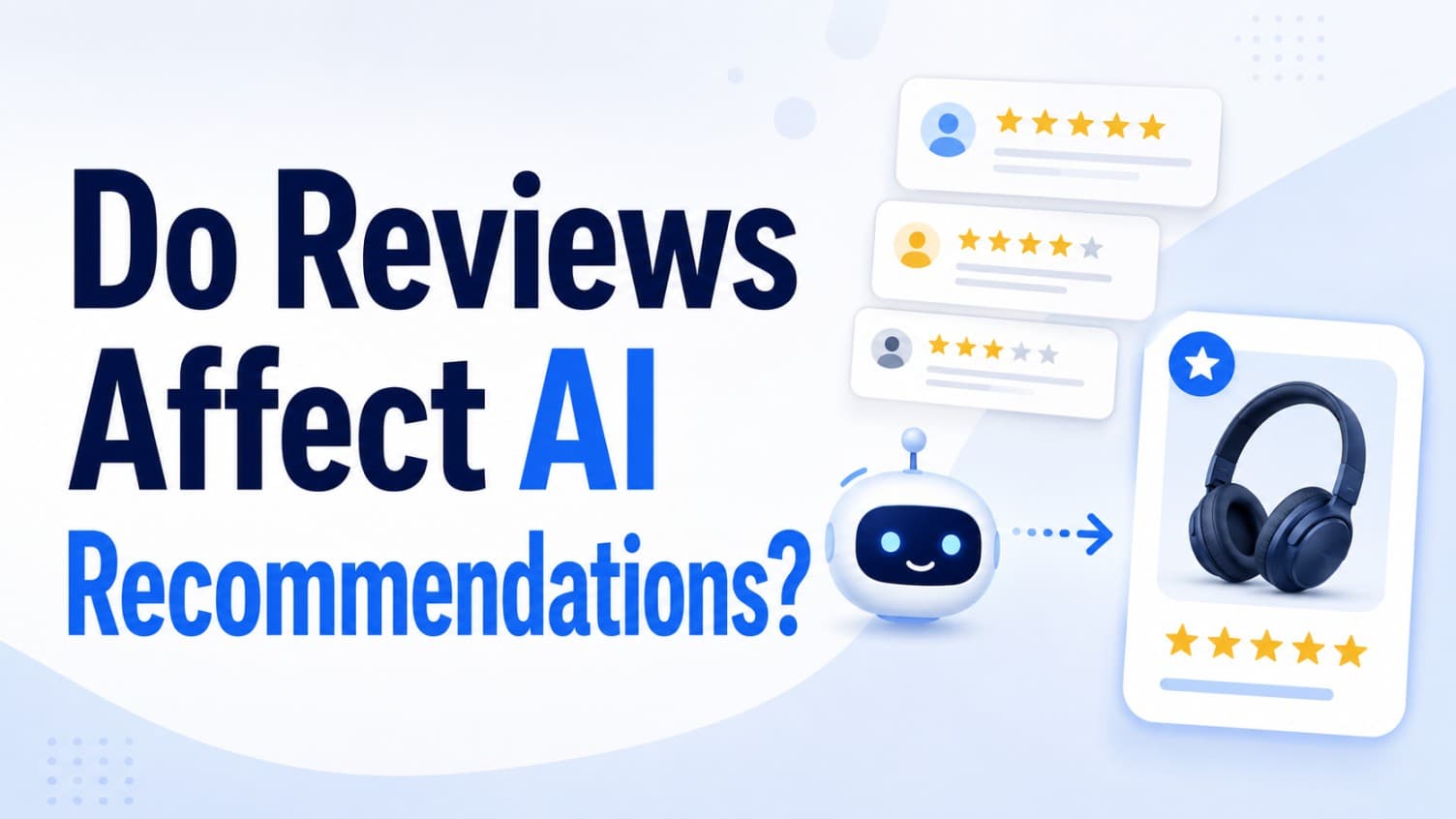
Reviews can affect AI recommendations, but not in the simple way many local businesses imagine.
They are not a magic switch that makes ChatGPT recommend you. They are a public trust surface. AI search tools may summarize or reference them depending on the product, the source, and the query. Customers also use reviews to verify what an AI answer says before they book, call, request a quote, or contact the business.
So the practical answer is this: reviews help when they make your business easier to understand and easier to trust.
That does not mean chasing fake five-star volume. It means building an honest review surface that reflects real services, real customer situations, and real next steps.
Quick answer: do reviews affect AI recommendations?
Yes, reviews can matter for AI recommendations because they help describe what customers experienced and give people a way to verify the recommendation.
No, reviews do not guarantee that ChatGPT, Gemini, Perplexity, Google AI experiences, or any other AI search tool will recommend your business.
Yext's 2026 Consumer Search Behaviors Report says AI-driven local search is now part of consumer behavior and reports that many consumers verify AI recommendations through reviews, Google, websites, citations, and social profiles. Source checked June 1, 2026: Yext 2026 Consumer Search Behaviors Report.
BrightLocal's 2026 local consumer review research also shows AI tools have become a meaningful recommendation source for local businesses while reviews remain central to consumer trust. Source checked June 1, 2026: BrightLocal Local Consumer Review Survey 2026 and BrightLocal AI local recommendations research.
The safe way to think about it:
- Reviews may help AI and customers understand what your business is known for.
- Review text may include service, staff, location, and customer-context clues.
- Review freshness may affect trust when customers compare options.
- Owner responses can show how the business handles praise, confusion, and complaints.
- Fake, scripted, incentivized, or gated reviews create risk.
If you want the broader visibility checklist first, start with Will ChatGPT Recommend Your Local Business?. This article focuses on the review layer.
Why reviews matter after an AI recommendation
AI search does not end the customer journey.
A customer may ask, "Who is good for a first facial near me?" or "Which local studio is best for beginner Pilates?" If an AI tool mentions a business, the customer still has to decide whether to trust it.
That verification usually happens across familiar surfaces:
- Google Business Profile
- review sites
- the business website
- social profiles
- photos
- service pages
- booking or contact paths
Reviews matter because they turn broad claims into customer language.
A website may say, "personalized care." A review might say, "They explained what to expect during my first visit and did not pressure me to book more." That second sentence is more useful to a nervous first-time customer.
A website may say, "expert color services." A review might say, "I booked a color consultation before balayage and they explained maintenance clearly." That gives AI and humans a more specific service clue.
The point is not to stuff reviews with keywords. The point is to earn reviews that describe the real customer experience.
What AI and customers may learn from reviews
Review text can help answer questions that a business profile or homepage does not fully answer.
| Review signal | What it can clarify | Example |
|---|---|---|
| Service names | What customers actually bought or asked about | "balayage consultation," "first chiropractic visit," "laser hair removal consult" |
| Customer context | Who the business is good for | "first time," "nervous patient," "busy schedule," "new to the area" |
| Staff behavior | How the team communicates | "explained options," "answered questions," "did not rush me" |
| Outcome language | What customers felt after the visit | "knew what to book next," "understood the quote," "felt comfortable" |
| Location and access | Whether the business is easy to visit | "easy parking," "near downtown," "clear directions" |
| Follow-up experience | What happened after contact or booking | "quick reply," "clear estimate," "easy rescheduling" |
| Boundary signals | What the business handled carefully | "recommended a consultation," "explained pricing depends on review" |
These signals are useful because AI recommendations are often question-shaped.
People do not only ask, "best salon near me." They ask, "where should I go if I am not sure what color service to book?" They do not only ask, "best wellness clinic." They ask, "where can I go for a first visit if I have questions?"
Reviews that describe the actual decision moment can help the business look more relevant to that kind of search.
Local business review checklist for AI visibility
Use this checklist before you ask for more reviews.
| Area | What to check | Why it matters |
|---|---|---|
| Recent reviews | Do recent reviews reflect current services, staff, hours, and policies? | Old reviews can describe an outdated business. |
| Service specificity | Do reviews mention the services customers actually search for? | Specific service language helps people verify relevance. |
| Customer situations | Do reviews mention first visits, consults, quotes, booking, or common concerns? | AI and customers both need context, not only star ratings. |
| Review diversity | Do reviews reflect different services and customer types? | A single review pattern can make the business look narrower than it is. |
| Owner replies | Does the business respond in a calm, specific, professional way? | Replies show how the business communicates publicly. |
| Negative reviews | Are negative reviews handled without defensiveness or private details? | A good response can preserve trust even when the review is bad. |
| Policy compliance | Are reviews honest, unpaid, ungated, and based on real experiences? | Manipulated reviews create platform and legal risk. |
| Website consistency | Do service pages match what reviews say customers value? | If reviews and website content disagree, trust weakens. |
Google's Business Profile help says reviews can help a business stand out and that businesses can ask customers for reviews through a link or QR code. It also says owner replies are public and can help build relationships and trust. Source checked June 1, 2026: Google tips to get more reviews.
Google's prohibited and restricted content policy says contributions should reflect a genuine experience. It prohibits offering incentives for reviews, discouraging or prohibiting negative reviews, and selectively soliciting positive reviews. Source checked June 1, 2026: Google prohibited and restricted content.
That means the right goal is not "get perfect reviews." The right goal is "make it easy for real customers to leave honest reviews after real experiences."
The honest review request script
Do not script what customers should say.
Do not ask only happy customers.
Do not offer discounts, gifts, upgrades, or rewards for reviews.
Do not ask customers to mention specific keywords.
Use a neutral request that makes the process easy and leaves the wording to the customer.
Here is a safe pattern:
Thanks for visiting us. If you have a minute, your honest review helps future customers understand what to expect. You can mention what you came in for, what was helpful, or anything you think someone should know before booking. Here is the review link.
For a quote-based business:
Thanks for contacting us about your project. If our team helped you understand the process or next step, your honest review helps other local customers know what to expect. Here is the review link.
For a first-visit business:
Thanks for trusting us with your first visit. If you are open to it, an honest review about your experience can help other first-time customers decide whether we are the right fit.
The wording matters. You are not asking for a five-star review. You are asking for an honest review from someone who had a real experience.
FTC endorsement guides say endorsements must reflect the honest opinions, findings, beliefs, or experience of the endorser, and the Consumer Reviews and Testimonials Rule addresses fake reviews and buying positive or negative reviews. Source checked June 1, 2026: 16 CFR Part 255 endorsement guides and 16 CFR Part 465 consumer reviews and testimonials rule.
Review response matrix
Owner replies are not only for the reviewer. They are for every future customer reading the review.
Use this response matrix.
| Review type | Best response | Avoid |
|---|---|---|
| Positive and specific | Thank them and reflect the service or context naturally. | Stuffing keywords or writing a sales pitch. |
| Positive but vague | Thank them briefly and keep it human. | Pressuring them to edit the review with more detail. |
| Negative but fair | Acknowledge, apologize where appropriate, and invite private follow-up. | Arguing, exposing private details, or blaming the customer. |
| Confused or mixed | Clarify the next step and offer to help offline. | Turning the reply into a policy lecture. |
| Fake or policy-violating | Report through the platform and respond carefully if needed. | Public accusations you cannot verify. |
| Sensitive service issue | Keep the reply minimal and move to a private channel. | Sharing health, payment, identity, or appointment details. |
Good replies are calm, specific, and short.
For example:
Thanks for sharing this. We are glad the consultation helped you understand the next step before booking.
Or:
We are sorry this did not meet expectations. We would like to review what happened and follow up directly. Please contact us at the number on our website.
The goal is not to win an argument in public. The goal is to show future customers that the business listens and handles issues responsibly.
Local examples
Salon
A review that says "great service" is nice. A review that says "they helped me decide between balayage and color correction during a consult" is more useful.
That does not mean the salon should tell customers what to write. It means the salon should ask at the right moment, after a real visit, and let the customer describe what was helpful.
Wellness clinic
A first-time visitor may care more about clarity than speed. Reviews that mention "they explained the first visit" or "I knew what to expect" can help other new patients verify fit.
The clinic should still avoid medical claims, diagnoses, or privacy details in owner replies.
Med spa
Reviews can describe the consultation experience, staff communication, and comfort level. They should not be used to promise outcomes or imply everyone is eligible for a treatment.
Owner replies should stay conservative: thank the customer, avoid medical detail, and route new visitors to consultation when appropriate.
Quote-based local service
Reviews that mention "clear estimate," "explained the timeline," "asked for photos," or "followed up quickly" can help future customers understand the process.
That matters because quote-based buyers often want to know what happens before they submit details.
Mistakes that weaken reviews in AI search
Avoid these mistakes:
- Chasing stars without substance. A high rating with vague reviews may not answer specific customer questions.
- Asking for scripted language. It can make reviews look unnatural and may create compliance risk.
- Only asking happy customers. Selective solicitation can violate platform rules and distort trust.
- Offering incentives. Discounts, gifts, or rewards for reviews are risky under platform and FTC rules.
- Ignoring negative reviews. A calm response can help future customers understand how you handle problems.
- Letting old reviews define the business. If services changed, the review surface should keep evolving through honest new reviews.
- Letting the website and reviews disagree. If reviews praise a service that your website barely explains, fix the service page.
The strongest review strategy is boring in the right way: ask consistently, ask honestly, respond professionally, and keep the website aligned with what customers say.
Where CatchWhen fits
CatchWhen does not generate reviews, buy reviews, hide negative reviews, or control AI recommendation rankings.
That is not the product.
CatchWhen helps when a customer reaches the website after reading reviews or receiving an AI recommendation. It creates a Website Support Agent that answers from approved business content and routes visitors to booking, quote, call, email, or contact paths.
That matters because reviews often create the next question.
A customer might read:
- "They helped me choose the right service."
- "The consultation made pricing clear."
- "The first visit was easy."
- "They explained the quote before scheduling."
Then the customer lands on your website and asks, "Which service should I book?" or "What should I expect at the first visit?" or "Where do I request a quote?"
If your website cannot answer that moment, the review created interest but the site still leaked the lead.
CatchWhen sits after the review and before the final action. It helps the website continue the trust chain.
AI recommendations and local business reviews questions
Do Google reviews help ChatGPT recommend my business?
They may help indirectly because reviews are public trust signals that customers and AI search tools may use or summarize depending on the product and query. They do not guarantee that ChatGPT will recommend your business.
Should I ask customers to mention specific services in reviews?
Do not script reviews or tell customers what to say. You can ask for an honest review and invite them to describe what was helpful, what they came in for, or what future customers should know.
Should I reply to every review?
Replying consistently can help future customers see how the business communicates. Keep replies calm, specific, and short, and avoid private details or arguments.
Can I offer a discount for a review?
No. Google policy prohibits incentives in exchange for reviews, and FTC endorsement and review rules warn against deceptive review practices. Ask for honest reviews without rewards or selective pressure.
Takeaway
Reviews affect AI recommendations by making your business easier to understand and easier for customers to verify.
They are not a guarantee. They are evidence.
Earn real reviews. Ask consistently. Do not script, gate, buy, or incentivize them. Respond like a business future customers can trust. Then make sure your website answers the questions those reviews create.
AI can mention you. Reviews can validate you. Your website still has to convert the moment into a booking, quote request, call, or contact.

Article by
Leo Lee
Leo Lee is the founder and builder of CatchWhen, a Customer Support AI System that creates AI Support Agents for appointment-based local businesses. CatchWhen helps med spas, salons, wellness clinics, and other independent service businesses answer customer-facing website inquiries and route ready leads into the booking, quote, or contact tools they already use. Leo writes about the workflows, guardrails, and infrastructure behind production-ready AI customer support agents.
Keep reading

AI Chatbot for Small Local Businesses: A Practical Website Guide
A practical guide to AI chatbots for small business websites: what they answer, where they fit, and how local owners route visitors to booking or quote links.
 Leo Lee
AI Chatbot for Med Spas: Route More Consult Requests from Your Website
A practical guide to med spa website chatbots: answer Botox, filler, laser, pricing, and consult questions, then route visitors to your existing booking path.
Leo Lee
AI Chatbot for Wellness Clinics: Answer First-Visit Questions Faster
A practical guide to wellness clinic website chatbots: answer physio, chiro, massage, pilates, yoga, and IV drip first-visit questions, then route ready visitors to booking or intake.
Leo Lee